Radioactivity and the discovery of polonium and radium
Pioneering research on radioactivity, including the discovery of the elements polonium and radium.
Scientist Exhibit
Physics • Chemistry
Pioneering research on radioactivity; discovery of polonium and radium
Overview
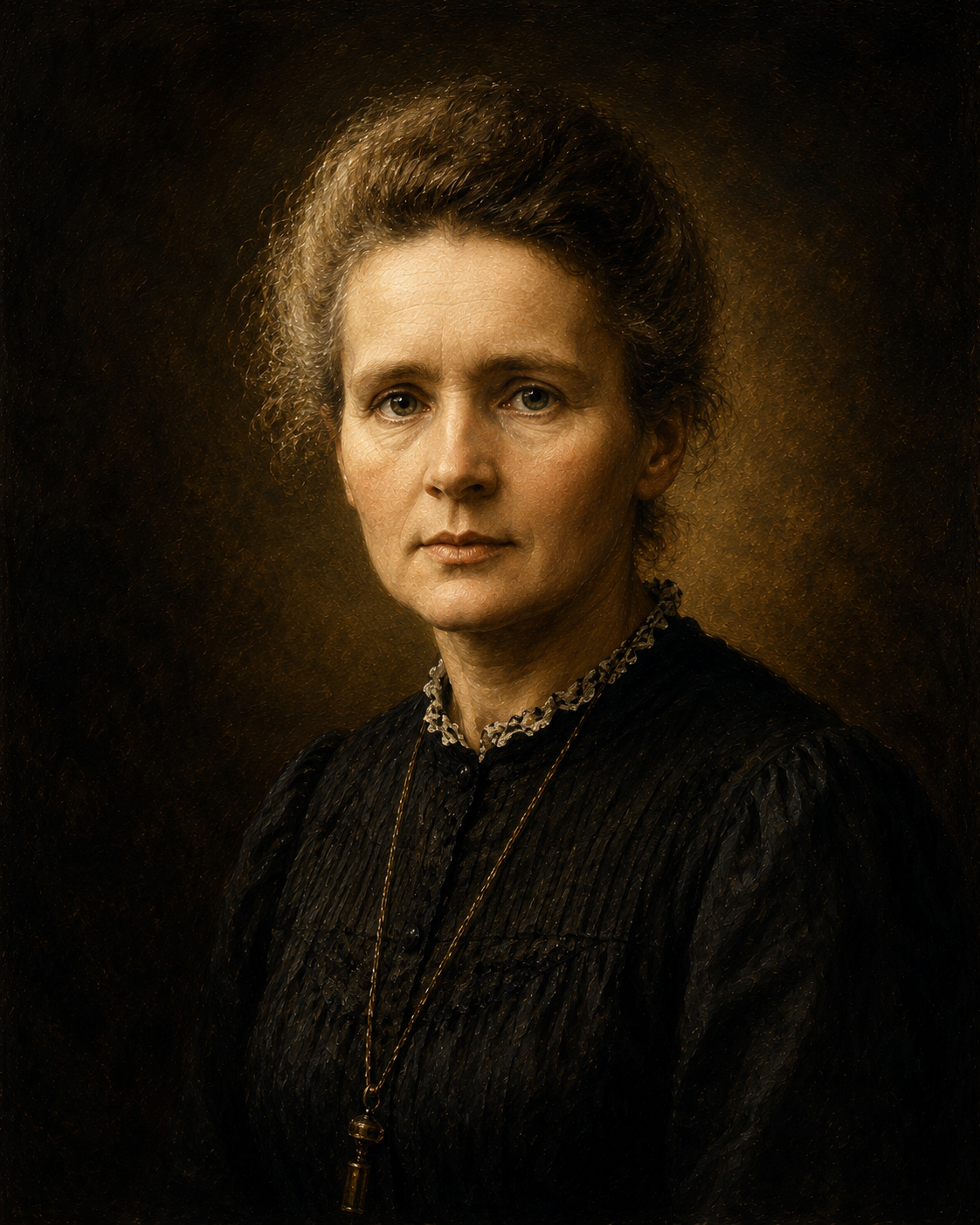
Marie Curie transformed modern physics and chemistry through her research on radioactivity. Working with Pierre Curie and later leading her own laboratory, she helped isolate polonium and radium and developed methods for measuring radioactive substances. She became the first woman to receive a Nobel Prize and the first person awarded Nobel Prizes in two different sciences. During the First World War, she also promoted mobile X-ray units for battlefield medicine.
Scientific Contribution
Pioneering research on radioactivity, including the discovery of the elements polonium and radium.
Life Timeline
education
Marie Skłodowska moved to Paris to continue her studies at the Sorbonne.
award
Marie Curie shared the 1903 Nobel Prize in Physics with Pierre Curie and Henri Becquerel.
career
After Pierre Curie's death, she succeeded him as Professor of General Physics, becoming the first woman to hold the position.
award
Curie received a second Nobel Prize, this time in Chemistry.
career
During World War I, Curie organised mobile X-ray teams to support medical care.
Places & Networks
research institute
Paris , France
View Institution →Continue Exploring