Modern professional nursing
Reforms that helped establish modern professional nursing practice and hospital care.
Scientist Exhibit
Statistics & Data Science • Medicine & Health
Used statistical evidence and data visualization to reform hospital sanitation
Overview
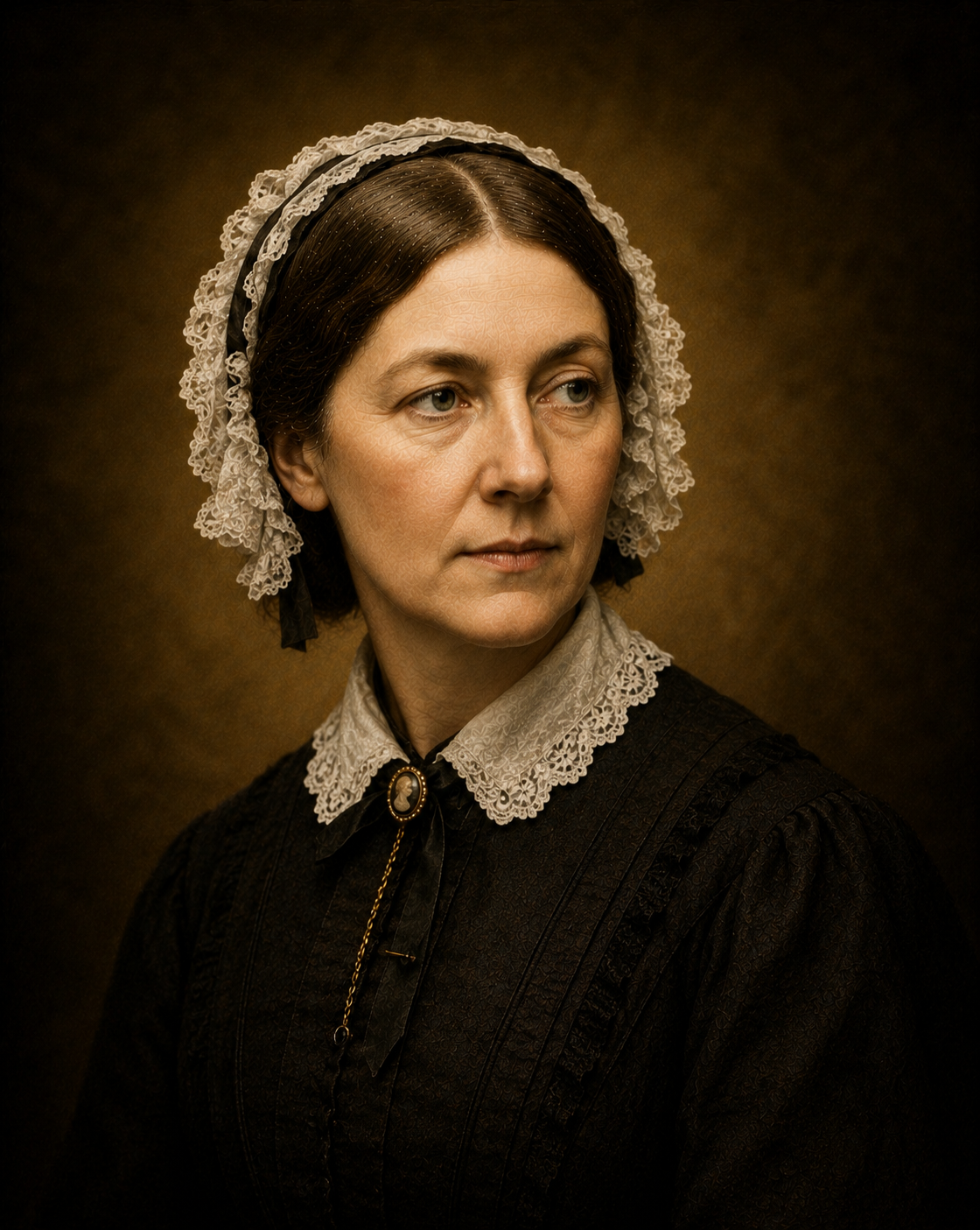
Florence Nightingale transformed nursing and hospital administration through observation, record keeping, and statistical analysis. During and after the Crimean War, she documented how sanitation and hospital conditions affected mortality. Her visual presentations made complex evidence persuasive to policymakers and helped establish professional nursing.
Scientific Contribution
Reforms that helped establish modern professional nursing practice and hospital care.
Use of statistical polar-area diagrams and quantitative evidence to communicate mortality and public-health patterns.
Life Timeline
career
Nightingale led a team of nurses to the military hospitals at Scutari, where she worked to improve care and hospital conditions.
publication
Nightingale used mortality statistics and polar-area diagrams to communicate the preventable causes of soldiers' deaths.
career
The Nightingale Training School for nurses opened at St Thomas' Hospital, helping professionalise nursing education.
publication
Nightingale's Notes on Nursing set out practical principles for nursing, health and the patient's environment.
Places & Networks
training school
London , United Kingdom
View Institution →Continue Exploring